
Step by Step
Roots, Rothbury and Trying to Make Things Happen
For those who don’t know the story, my connection to this part of Northumberland goes back well before me.
My granddad, also called Tom, was a hill shepherd at Uswayford, in the Upper Coquet Valley, until his death in 1987, the year I was born. My gran, Mad Ag — to whom I seemingly owe a fair proportion of my genetic disposition — and my uncle Coke stayed on for a few more years.
Somehow, despite being very young, I can still recall the trips up to Uswayford. We frequently travelled at least partially sideways, thanks to my dad’s built-in default rally mode. They remain very fond memories.
Farming, however, has never been an easy world to get into.
After numerous attempts to secure a farm tenancy — something that was, and remains, extraordinarily difficult — my dad and uncle eventually abandoned ship. Our branch of the family moved on, and I was brought up in Berwick-upon-Tweed.
Looking back, I think Berwick was a remarkably good place to be schooled.
It was a town where serious deprivation and considerable wealth existed alongside one another, all thrown together into one great smorgasbord of an education. At school, I generally got on with everyone. Until I didn’t. But those disagreements were normally resolved fairly quickly.
What that education gave me, perhaps more importantly than anything on the curriculum, was an ability to engage with people.
That might sound like a small thing. I don’t think it is.
The ability to sit down with somebody, understand where they are coming from, find some common ground and get something done is an enormously valuable skill. It is sometimes associated with the confidence and networks produced by the best public schools in the country. I learned my version of it in Berwick.
I remain rather proud that my two closest friends come from almost polar ends of that spectrum: one an old Amplefordian, the other somebody I have known since we were eight years old.
Getting on with people, and trying to make things happen, is, for better or worse, part of who I am.
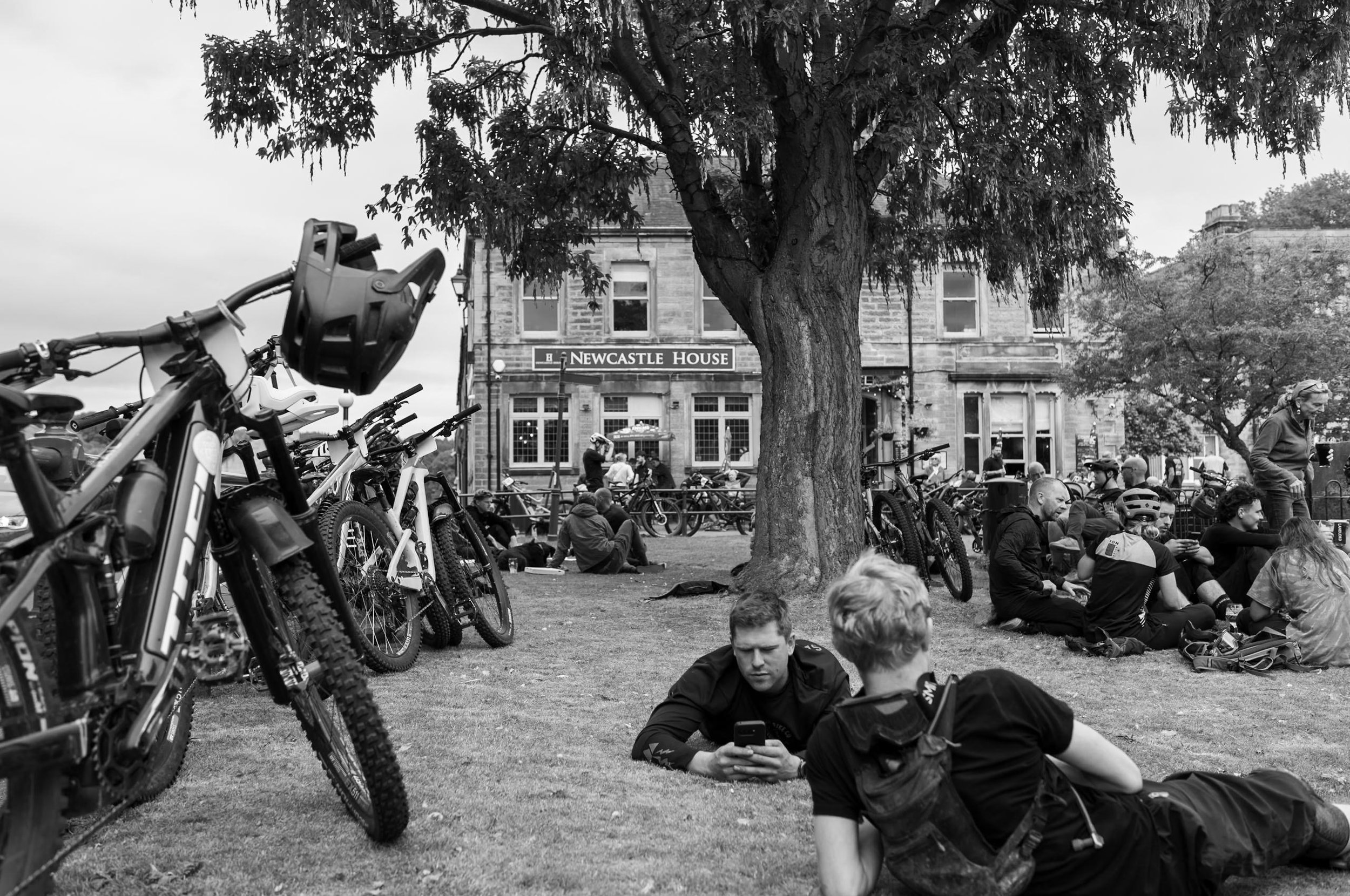
Riders beside the Armstrong Cross, Coquet Classic 2025
Finding somewhere to ride
Fast-forward to 2008 and I was sitting second overall in the UK Downhill Series, in the Expert category, after four races. I had returned from nearly 18 months out through injury and felt as though I was playing catch-up. I wanted to progress, and to do that I needed suitable tracks on which to train.
At the time, Thrunton Woods was becoming increasingly popular with local riders. The tracks — built without permission — were steep, technical and, if a little short, provided some of the challenge we needed.
Elsewhere, Kielder was beginning to play a very different role in Northumbrian mountain biking. It was becoming the region's honey-pot destination, an endeavour championed by Forestry England. It already had recreational infrastructure, and purpose-built bike trails appeared to fit reasonably comfortably alongside the vast crops of Sitka spruce that form an important part of the UK's timber supply.
Smaller riding scenes existed around Wooler, driven in no small part by the Cheviot Hill Riders. Through club timing days and a Lottery-funded bike track on Whitsun Bank, CHR enabled countless young people to get into the sport. They eventually secured a club facility on private land which was well used and maintained.
As a young rider, these were heady days. Life was full of optimism.
Rothbury had riding too, but it was much more traditional, old-school mountain biking.
Kidland, near Alwinton, hosted numerous races each year organised by Northern Downhill, a group from Durham. Outside race weekends there was no formal access to the venue, although local riders inevitably made use of what were some of the best trails in the UK.
Kidland's remoteness and complicated access were both its blessing and its curse. Outside organised events, it was an extremely difficult place to commercialise. Nor could mountain biking realistically compete with productive forestry in terms of direct financial return from the land.
That problem stuck with me.
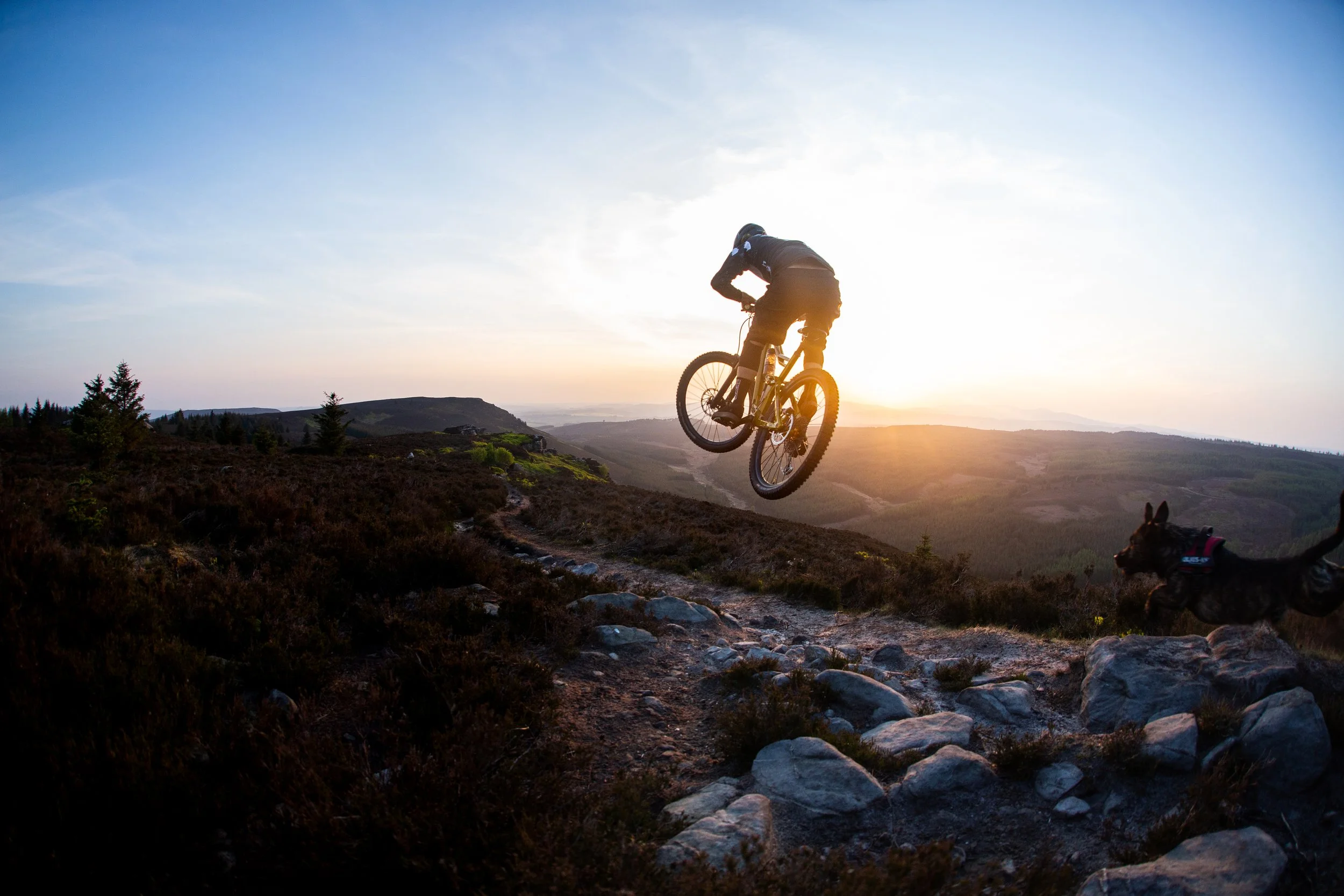
Thrunton Woods, 2019
Could mountain biking become part of Rothbury's economy?
By 2017, I had started thinking seriously about how Rothbury could bring mountain biking into its economy.
We already had long-distance routes such as the Sandstone Way, but I didn't believe they were delivering what was needed. The route was designed as well as circumstances allowed, but in places it was a slog: too many gates, awkward sections and occasions where taking the road simply made more sense.
More importantly, Northumberland was competing against much bigger, more joined-up thinking in Scotland and Wales.
I realised I needed to learn.
By this point my once-tempestuous relationship with Alex MacLennan at Forestry England had thawed, and trust was beginning to develop.
Understanding organisations such as Forestry England was important. This was an organisation geared around producing a strategic supply of timber on 40-to-60-year cycles. Two or three-year plans weren't naturally how it worked — or, at least, they weren't then.
I initially approached Alex about putting on a new event at Kidland. Quite rightly, he pointed out that Northern Downhill had worked long and hard to establish the venue and directed me towards them instead.
That conversation eventually became something much bigger.
Northern Downhill (NDH) were struggling to attract more than around 90 riders to an event. I thought we could attract 400 or 500.
So together with NDH, created a brand, built media around a strong sense of place and community, and tried to make the event feel like something people wanted to belong to rather than simply another race.
In the first year, 2017, we sold 400 event tickets.
By 2021, my final year of involvement, we sold 800. Around 2,000 people were on site and some of the UK's largest mountain-bike brands were joining us.
Something that had begun as a relatively small event had become one of the most talked-about enduro mountain-bike events in the country.
But the numbers were also telling me something.
For several reasons, I could see that I was running out of steam and that the pieces of the puzzle weren't aligning in a way that would allow me to grow it further.
Walking away was difficult. I had put an enormous amount into taking the event from where it had been to where it was. But I also knew it had found its place and could succeed without me.
It has continued to do exactly that.
More importantly for what came next, the event had given me a crash course in negotiation, land use, access, events, marketing, stakeholder management and the sometimes conflicting interests surrounding the rural economy.
A much bigger change was coming
At roughly the same time, something much larger was happening in British agriculture.
The Common Agricultural Policy and Basic Payment Scheme were on their way out, to be replaced by the new principle of "public money for public goods" and the Environmental Land Management schemes.
For farmers and landowners, this represented a fundamental change in how land might generate income.
I was watching this through a slightly different lens.
If public money was increasingly going to reward land for delivering wider benefits, could recreation and access form part of that equation? Could mountain biking become not simply something people did on the land, but a legitimate component of the rural economy?
There was a long transition period, and I had already learned something important: government agencies, forestry and agricultural policy do not move quickly.
If mountain biking was going to become part of the future rural economy around Rothbury, I suspected we might already be late.
So I started knocking on doors.
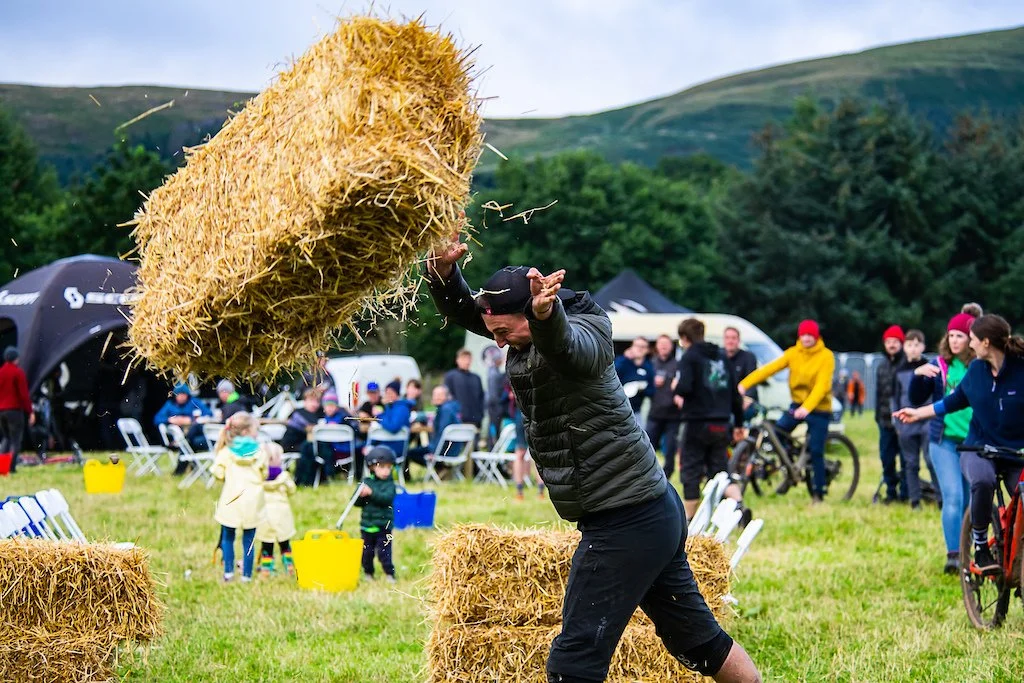
The 2021 Naughty Northumbrian. A fantastic event to be involved with that continues to be a great success.
Attempt number one
In 2019 I began speaking to the Bamburgh Castle Estate, exploring whether mountain biking, trails and access might somehow be incorporated into the emerging environmental land-management system.
At that point I perhaps underestimated quite how long and complicated the government's implementation of the new schemes would prove to be.
Nothing immediately came of the discussions, but I kept the dialogue open. The estate owns a significant body of land around Rothbury, and maintaining that relationship mattered.
Northumberland Estates represented another enormous piece of the geographical puzzle, but I knew I wasn't in a position to make progress there, so I didn't try.
Instead, I spoke to the Northumberland National Park Authority — Rob Mayhew specifically — about the possibility of creating trails at Simonside.
They were open to the idea.
One down.
It felt like an important breakthrough.
I took that support to Forestry England, thinking the backing of the National Park might help chivvy things along.
It did not.
The proposal was flatly rejected.
Three landowners and a very large problem
That exposed one of the fundamental difficulties facing any attempt to create recreational infrastructure around Rothbury.
Land ownership is highly concentrated.
From a conservation perspective, I can see considerable advantages to that. Trying to carry out landscape-scale environmental work across one large holding can be infinitely easier than negotiating separately with dozens or hundreds of small landowners.
But there is another side to it.
You can have an idea supported by a hundred people, but if the three people controlling the land don't support it, you aren't going anywhere.
For a community trying to develop new recreational opportunities and diversify its economy, that can have real consequences.
Beyond established public rights of way, recreation simply wasn't high on the agenda.
I was stuck.
We had already formed a trail association, Cheviot Valley Trails. We had enthusiasm and ideas.
What we didn't have was any land.
Nor did we have agreements that allowed us to do anything.
So we made the organisation dormant.
Attempt number one had failed.
But failure is only completely wasted if you learn nothing from it. I had learned a huge amount about the organisations involved, their motivations, the obstacles, the timescales and, crucially, the weaknesses in my own approach.
I adjusted accordingly.
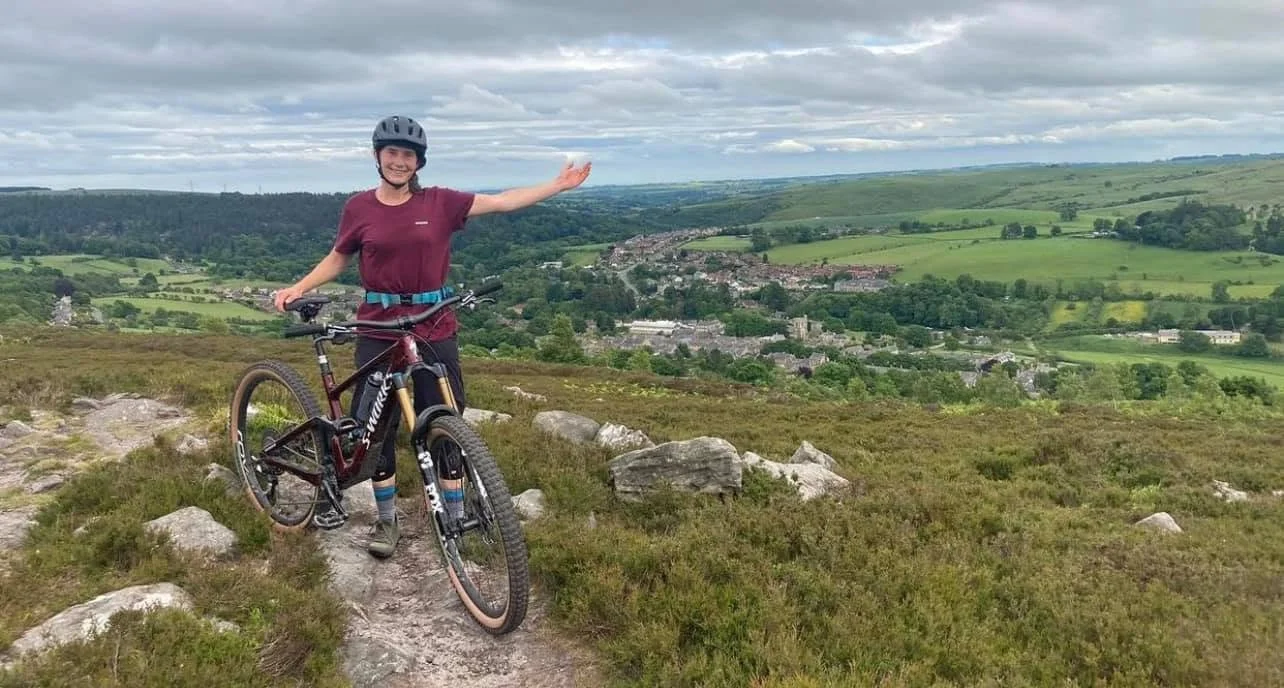
Former World Champion Manon Carpenter on Rothbury Carriage Drive, 2021
Then Storm Arwen arrived
For all my strategic scheming, the thing that changed everything wasn't planned at all.
Storm Arwen entered the fray in November 2021 with extraordinary destructive force.
Kidland was devastated.
I drove through three days after the storm. If you hadn't known any better, parts of it could have been mistaken for a war zone.
Simonside was flattened too.
It was a truly remarkable change to a landscape I had known for years.
And almost immediately, I sensed an opportunity.
That perhaps sounds strange when talking about such destruction, but disruptive moments have never particularly fazed me. I have faced a few of them in my own life, including losing the use of a limb.
When circumstances fundamentally change, there isn't much value in wishing they hadn't.
You adapt. You change. You work out what the new landscape looks like and you move forward.
Always forward, really, because there isn't another useful direction.
Forestry England suddenly had a very different landscape to deal with. The assumptions underpinning some of our previous conversations had changed with it.
So, in early 2022, I went back to Alex MacLennan.
Again.
This time I approached him about creating trails — and potentially an event around them — that could provide something lasting for the local community.
Given the response to my previous proposal, I wasn't expecting very much.
Alex wanted to meet.
I was astonished.
And that meeting was the point at which years of riding, failed proposals, event organisation, negotiation, relationship-building and repeatedly knocking on doors began to converge into something much more significant.
But getting a meeting was one thing.
Turning it into something Rothbury could actually use was going to be considerably harder.
The village had to be at the centre of it
Simonside alone wasn't enough to hold the sort of event I had in mind.
I had spent a considerable amount of time studying DEFRA's MAGIC mapping system and doing my own GIS work. The more I looked at the landscape, the clearer the problem became. Creating enough good riding on Forestry England land alone was going to be difficult.
So I got back on the phone to Bamburgh Castle Estate.
I can't go into all the details of how we eventually made it happen, but we owe a great deal to James Boulton and Will Armstrong for being prepared to support an idea that, understandably, wasn't universally popular from the outset.
Suddenly we had something we had never had before: the possibility of land use on both sides of Rothbury.
And that changed the idea completely.
Rothbury itself could become the anchor.
That was important to me. I didn't want this to become a cycling community operating in a silo, descending on the area, riding bikes and disappearing again.
I wanted cycling to become part of the community.
That meant businesses. Residents. Kids. Landowners. Farmers. Visitors. People who had never ridden a mountain bike and probably never would.
If we could bring all of those groups into the same orbit, an event could do more than provide some good racing. It could celebrate the village, generate income for local businesses and, crucially, build a much broader group of advocates for outdoor recreation.
Mountain biking needed friends beyond mountain bikers.
That distinction was incredibly important.
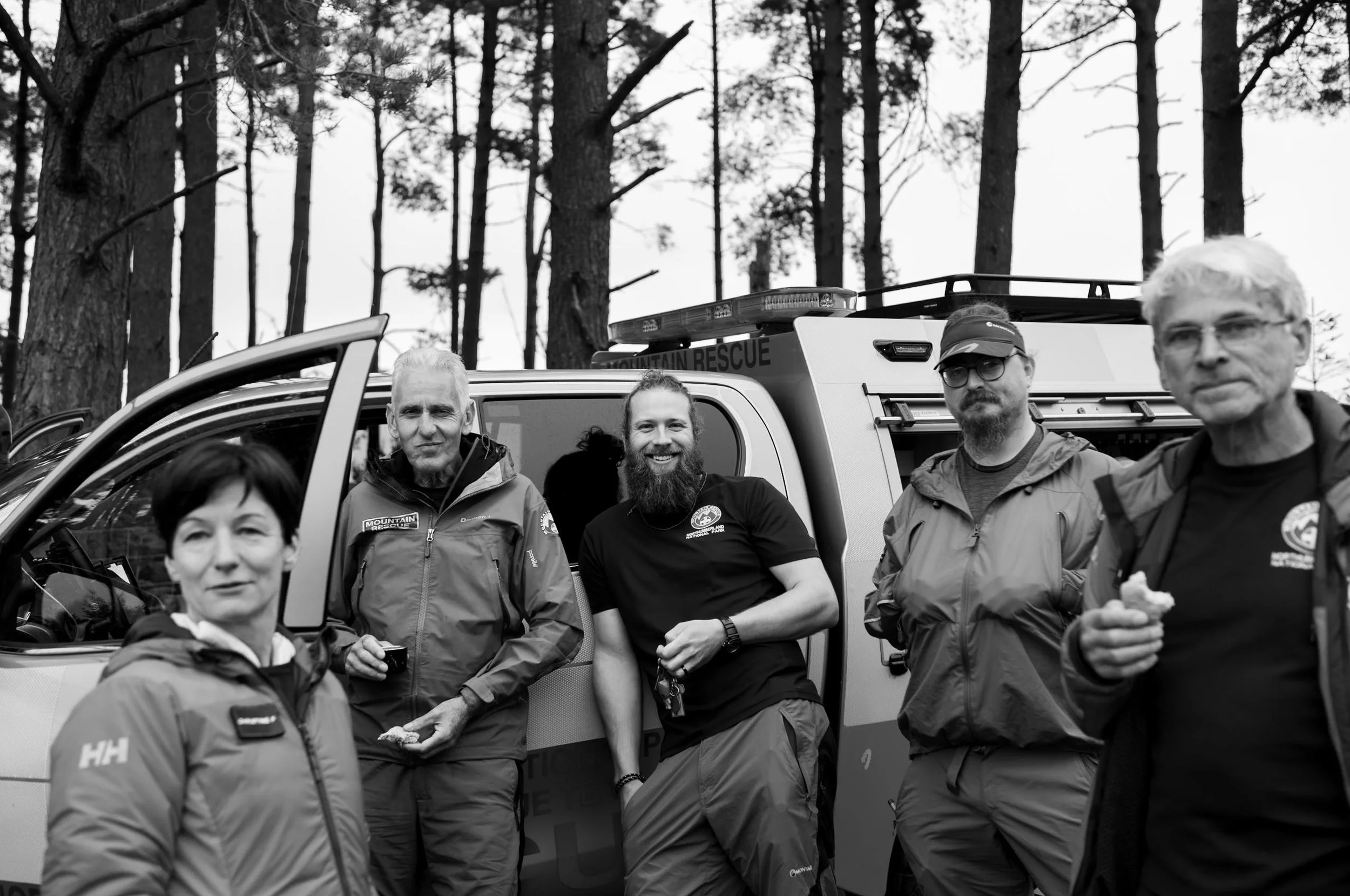
Team work makes the dream work.
Around the same period, something else was happening.
Andy Carman opened Scrub Cycles. Simon McClurey was working hard on the old railway-line bridleway application. Phil Stephenson, who worked for Santa Cruz Bicycles, moved to Rothbury.
I looked at the three of them and thought back to Cheviot Valley Trails.
The first trail association hadn't failed because the idea was necessarily wrong. Among other things, it had failed because there wasn't yet the land, the opportunity or the group of people required to carry it.
Now, perhaps, there was.
More importantly, I knew I had reached the limit of what I could achieve on my own.
So I asked them to a meeting.
From that meeting, Coquet Valley Trails was formed as a not-for-profit organisation.
That structure mattered.
If this worked, I wanted the value created by it to flow back into the place that made it possible. Volunteers would inevitably contribute huge amounts of time and effort. I didn't want that effort being used simply to create private value for one individual.
If the village was helping to build it, the village should benefit from it.
And being a community organisation opened conversations that would have been much harder for any one of us to have individually.
Another door opens
One of those conversations was with Northumberland Wildlife Trust.
By 2025, the Trust had taken in hand an area of degraded forestry where, for around 20 years, riders had quietly built and ridden trails.
Those trails had existed in the shadows.
Now we needed them to exist legitimately; both for the community and for the event.
Today, Coquet Valley Trails has a rolling year-to-year agreement with Northumberland Wildlife Trust for the land.
Of course, we'd like greater long-term security. And I think there is a fascinating bigger conversation to be had about what that specific feature of the landscape could become.
Unlike the peat of Lordenshaw, the soils are sandy and shallow. Rather than simply thinking of it as a block of degraded forestry, could we eventually reimagine parts of it as something more akin to open heather with widely spaced Scots pine, reminiscent, perhaps, of parts of the Cairngorms with trails and happy people flowing through it?
Those conversations are for another day.
For now, what matters is that we have developed a strong working relationship with the Wildlife Trust and have moved riding on that land from something hidden towards something that can legitimately contribute to the community.
That is a substantial change.
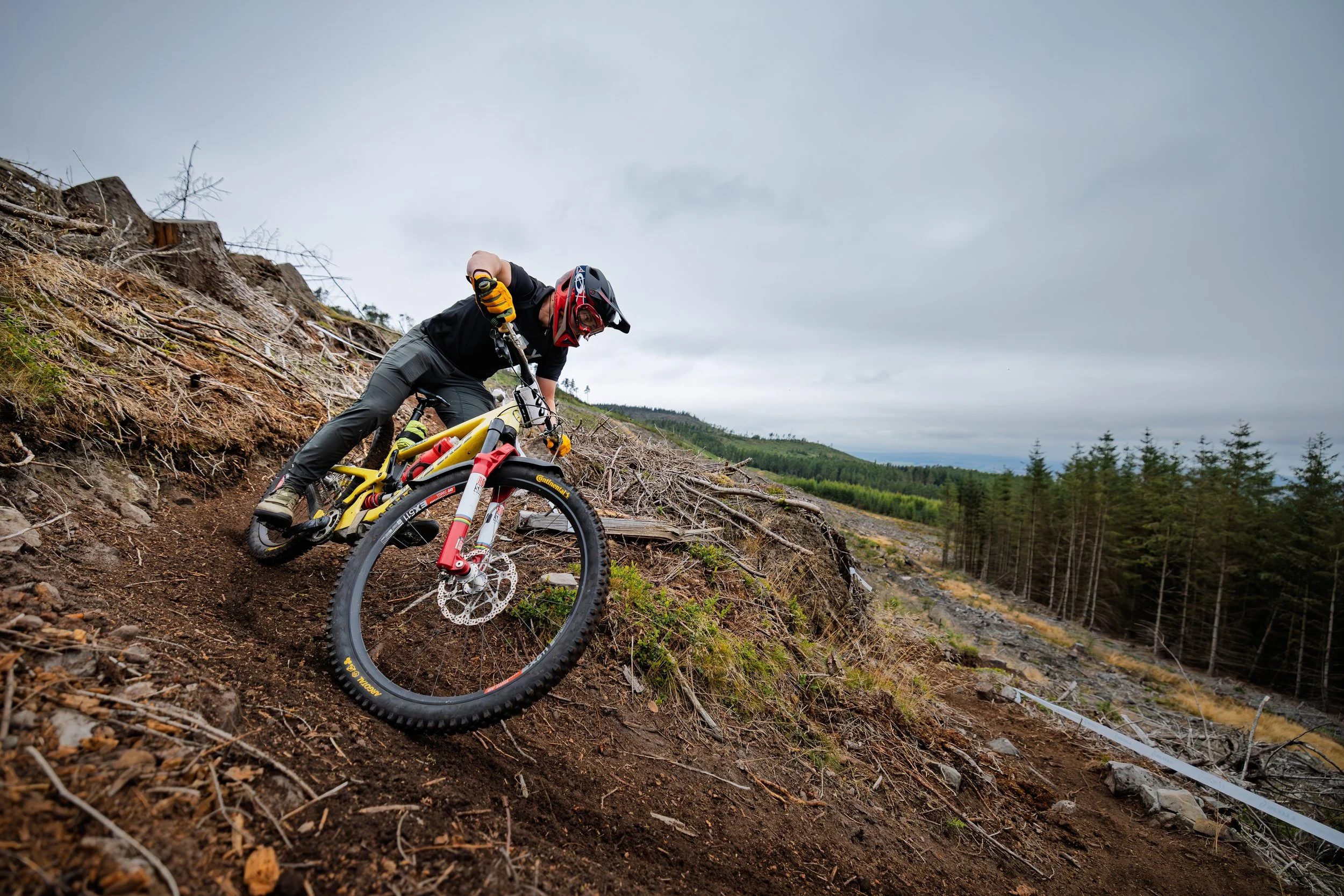
Good for riding, but this landscape doesn’t help mountain bikers build a sense of place in the wider context.
Then came the hard bit
Ideas are relatively easy.
Delivery isn't.
Simon, Andy and Phil began putting serious time into building trails and learning what it took to deliver an event at scale. Sourcing insurance took months.
There was, inevitably, a certain amount of winging it.
There were also days taken off work, endless meetings and conversations with Historic England, Natural England, landowners, tenant farmers, the Rural Payments Agency and others.
Every metre of trail exists within a landscape with somebody responsible for it, somebody farming it, somebody regulating it, somebody interested in its archaeology, ecology or commercial value; and often all of those things at once.
Those negotiations take time.
They take patience.
And sometimes they take their toll.
But in 2025, after years of false starts, rejected proposals, dormant organisations, relationship-building, mapping, meetings, negotiation and physical work on the ground, we delivered the first Coquet Classic.
It was not my event.
It wasn't Simon's, Andy's or Phil's either.
It was a genuinely collaborative effort by a community. And that distinction matters more than almost anything else in this story.
What happened next mattered more than the race
The event itself was a success.
But what followed made me prouder.
People saw something happening and started putting their own hands up.
Emma McClurey organised free coaching days for local children, funded using profits from the event. This was no small undertaking.
Fifty kids took part.
We worked to clear Storm Arwen damage at Simonside, reopening important routes through the forest - including access that can now be used more safely by Mountain Rescue.
And then there was the economic impact.
Using the Sheffield Hallam value-added methodology, we calculated that on one day in August the event brought around £50,000 of additional spending into Rothbury.
In the context of a national economy, £50,000 isn't a particularly impressive headline.
In a rural village, it is different.
Many of our businesses are one or two people deep. A café, shop, pub or small independent business doesn't need millions of pounds of economic growth for an unusually busy weekend to matter.
A few thousand pounds moving through those businesses can make a genuine difference.
Small business owners, the backbone of the British economy, understand that instinctively.
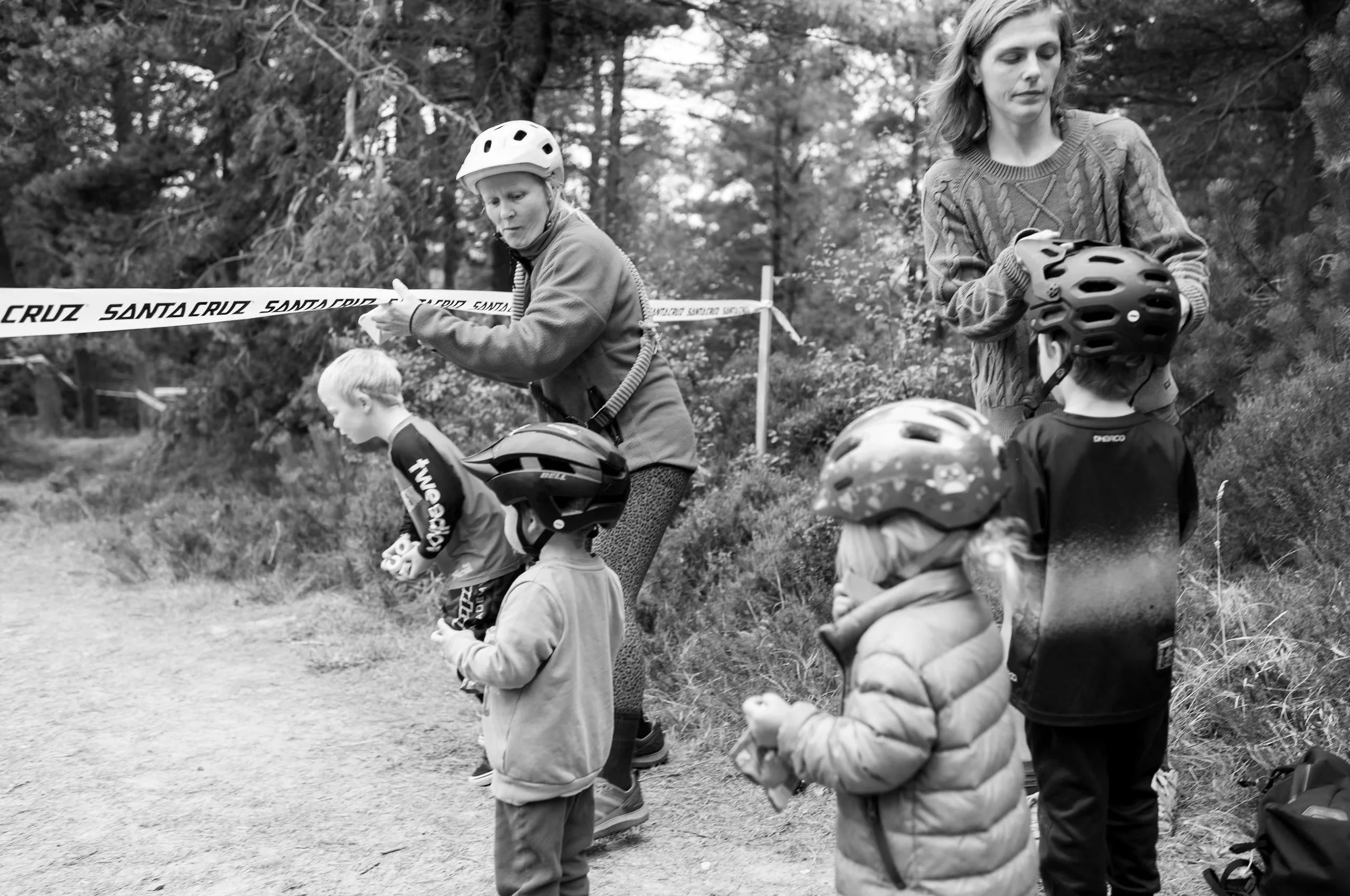
The bit that really matters
It would be tempting to finish this story with a pat on the back.
But that isn't really the point.
Long before Coquet Valley Trails existed, people were pioneering mountain-bike tracks in these woods.
They showed my generation what was possible.
Northern Downhill put years into Kidland. Cheviot Hill Riders gave young people opportunities around Wooler. Riders built trails at Thrunton. People quietly dug tracks in woods without knowing whether anybody would still be riding them 20 years later.
Then, when our turn came, people across Rothbury backed us when we needed them.
Landowners took chances.
Farmers accommodated us.
Businesses supported us.
Volunteers gave up their time.
People such as Simon, Andy, Phil, Darren Broderick, Adela Carter, Ian Jones, and Emma took an idea and added their own significant energy to it. Steven Bridgett was a fantastic enabler, helping us purchase an Ebike for trail inspections and carrying tools into the woods.
That, ultimately, is what Coquet Valley Trails has become.
It really is by the people, for the people.
I started this story at Uswayford because, for me, there is a thread connecting all of it.
My granddad worked these hills. My dad and uncle tried to find their own way to remain in farming but couldn't. I grew up elsewhere, but loved these landscapes through bikes, and eventually found myself spending years trying to persuade people that recreation could have a legitimate place within them.
There have been failures along the way.
Quite a few, actually.
But perhaps the most useful thing I've learned is that making something happen in a rural community isn't usually about having one brilliant idea.
It's about understanding the land. Understanding the economics. Understanding the organisations. Knowing when to push and when to wait. Building trust with people who don't necessarily want the same things you do. Recognising when your first idea isn't going to work. And, eventually, finding other people who care enough to pick up a shovel, attend another meeting or make another phone call.
It is slow.
It can be frustrating.
And when it works, it is enormously rewarding.
My hope for Coquet Valley Trails is actually very simple.
I hope it outlives all of us.
I hope that, if I'm fortunate enough to reach 100, there is another generation of enthusiasts looking after these trails, arguing about them, improving them and finding completely new things to do with them.
I hope children who first encountered a bike through one of our coaching days eventually bring their own children here.
And I hope the trails continue to give people something increasingly difficult to find in modern life: a sense of play.
A reason to exercise without calling it exercise.
A reason to spend time with other people.
And a different way to understand the extraordinary landscape surrounding Rothbury.
If we can leave that behind, while helping a few village businesses along the way, I think all those meetings will have been worth it.
